
What Is Hawaiian Koa Wood?
We started with a simple idea: find the most amazing curly grained Hawaiian Koa and instill it in life-proof designs. Turns out, finding amazing curly Koa isn't easy...but ours is the best on the market and is harvested from dead or dying trees.
HUNTING FOR KOA
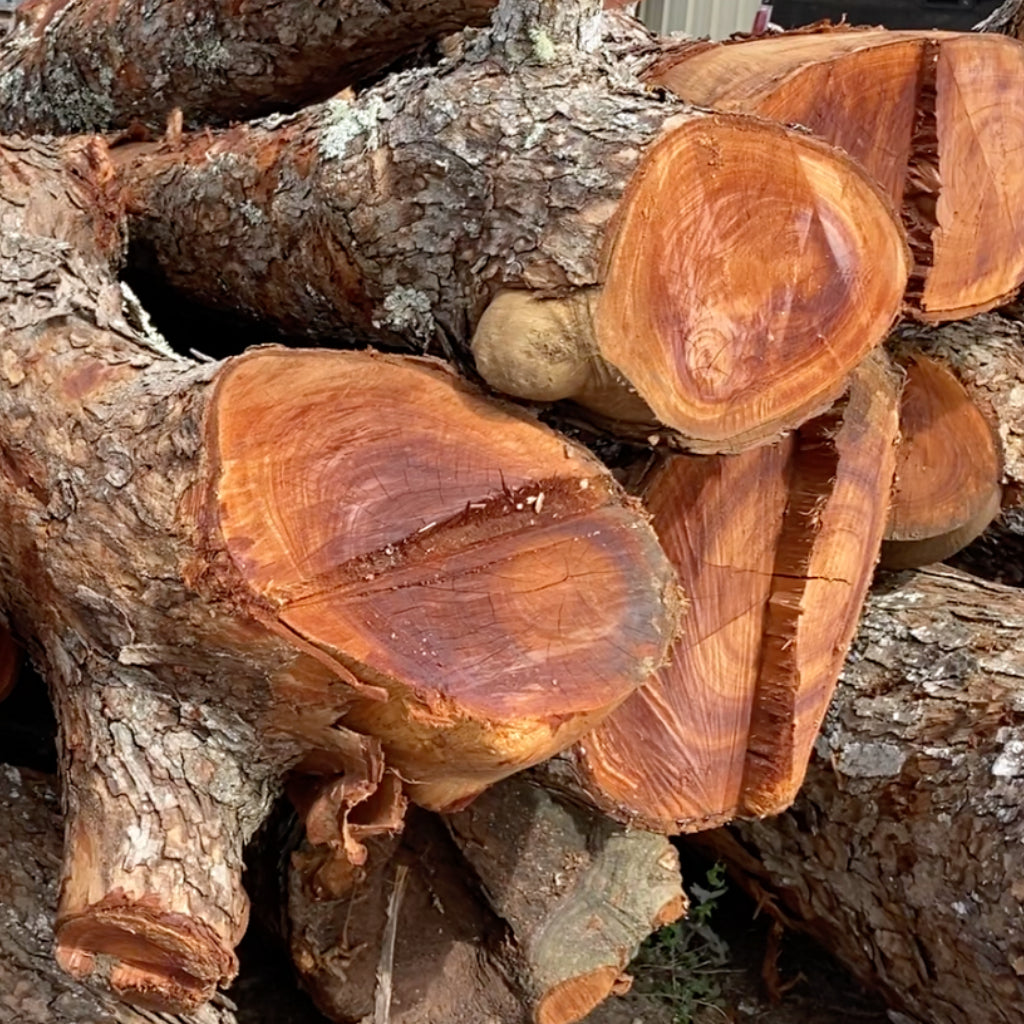
We are truly fortunate to be able to use the most rare and amazing Hawaiian Koa wood from the Big Island of Hawaii. Koa Only grows in Hawaii and we scour the island to find the tightest “curly” grained Koa, which has the most beautiful effect of irridescence and movement. As with most things in Hawaii, it's who you know and not easy to find on the open market...we are fortunate enough to get our hands on some amazing logs of Koa. We waited for over a year to find the current log that is lending it's magic to our products.
"CURLY" GRAIN?...HUHH?
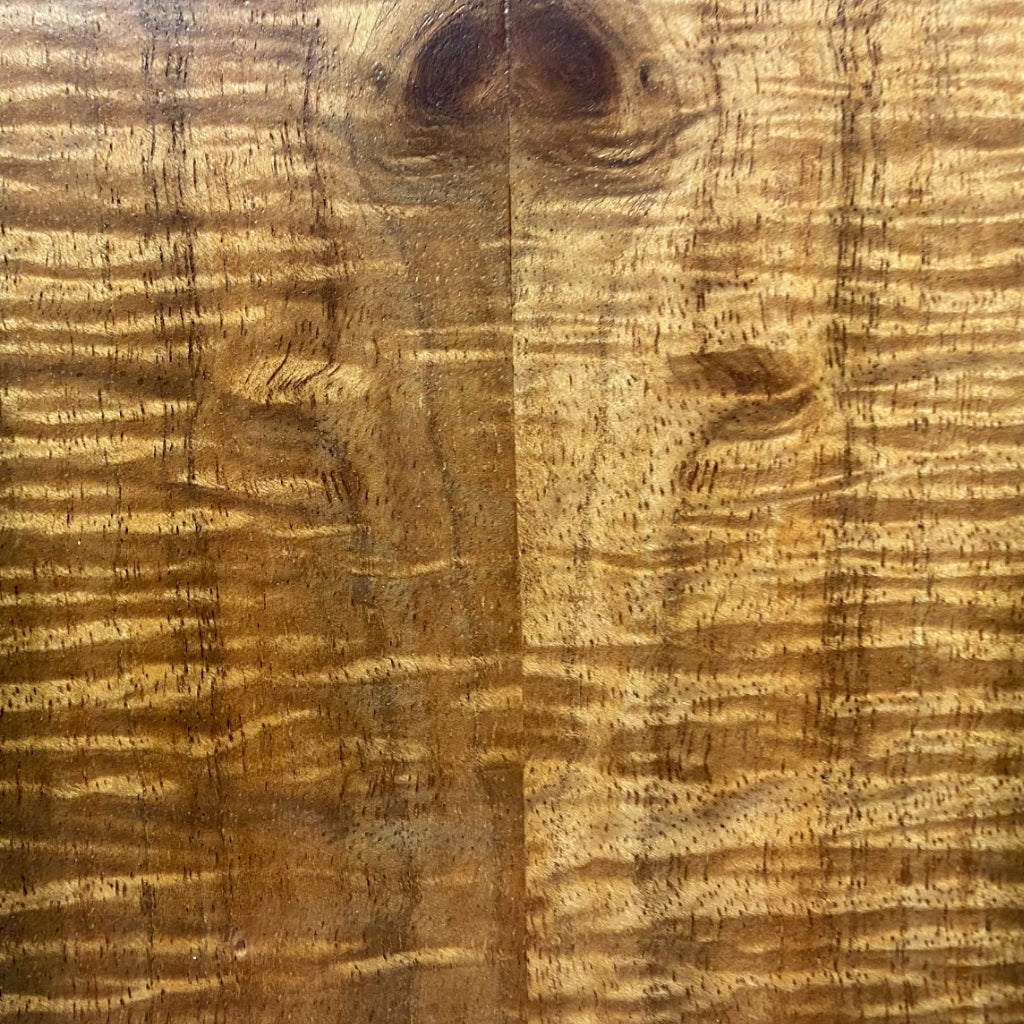
The "curly" grain creates “tiger-stripe” patterns in the wood that reflect the light at different angles and causes the grain to look like it moves when the item is moved in the light. In other woods, the grain pattern can be called fiddle-back or tiger grain but Koa is typically called "curly"...i suppose it would need to be called ukulele-back as we don't have too many fiddles out here. Point is, we use only the best. Regular grained Koa is a nice looking wood but it certainly won't turn heads... which is why we spend so much energy searching for the perfect Koa.
SHOULD I FEEL GUILTY?
Koa is protected due to its cultural significance and rarity so we use Koa that comes from dead or dying trees on private land. The rancher's love it as it's an additional source of income and given the skyrocketing costs of Koa, it's certainly more than beer money.
The high costs help ensure that the old growth forests remain healthy and new forests are planted to return the land back to it's pre-contact beauty.
WHAT ABOUT IT'S HISTORY?
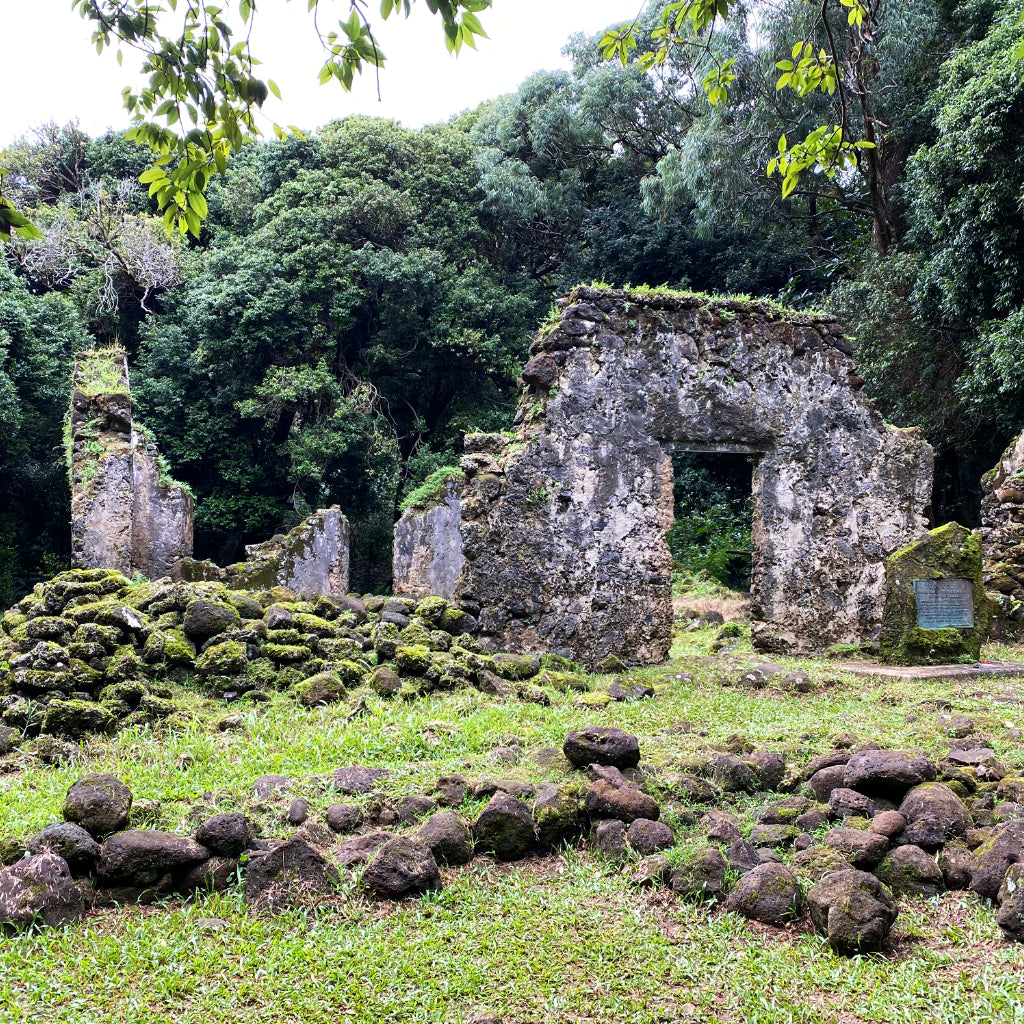
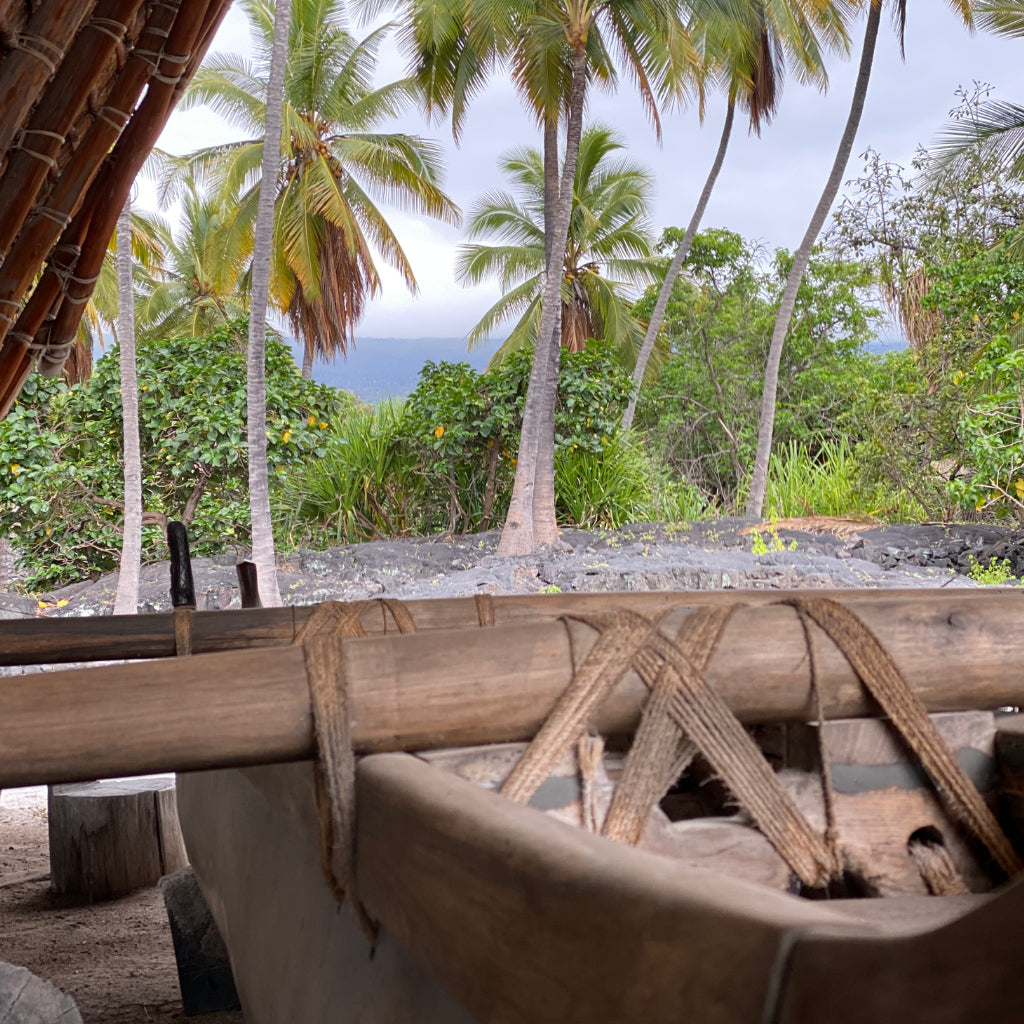
Koa has long been the cultural anchor of Hawaii. In the old days, Koa was reserved for Hawaiian Royalty and was used to make the first surfboards, outrigger canoes, and Hawaiian weaponry...to name a few. Essentially, Koa was at the historical and cultural heart of everything that we love about this amazing place. The lineage back to the ancient waterman and Hawaiian wayfinders is what sparked my imagination. It's my hope that the wood imparts that sense of adventure and exploration into my designs...so that they can be incorporated into your adventures.
Frequently Asked Questions
What is Hawaiian Koa wood?
Koa (Acacia koa) is a flowering tree that grows only in the Hawaiian Islands — nowhere else on the planet. It's Hawaii's most iconic native hardwood, used for centuries in surfboards, outrigger canoes, warrior weapons, and the interior details of Iolani Palace. Today it's one of the most valuable and sought-after hardwoods in the world, prized for its rich color, deep grain, and the shimmering "moving-in-the-light" character of the best pieces.
Why is Koa so rare and expensive?
A few reasons… Koa only grows in Hawaii — nowhere else on Earth. A large portion of native old growth Koa forests were destroyed by grazing cattle and or logged before protections came in…so supply is tight and getting tighter. In modern times, koa mainly grows at the upper elevations on the big island. Today, harvest is limited to dead or dying trees on private land — no live-tree cutting — which further limits supply. The most beautiful "curly" grade Koa is even rarer than regular Koa: it's a natural fluke of how the tree grew, and you might get one truly stunning board out of an entire tree. That's what makes each piece one-of-a-kind.
What makes "curly" Koa so special?
"Curly" Koa (sometimes called fiddleback or flame Koa) has a wavy, tiger-stripe grain pattern that makes the wood look like it's moving under the finish. As you tilt it, the light shifts across the grain — a three-dimensional shimmer that photographs can barely capture. Regular Koa is beautiful; curly Koa is stunning. The tightest curl density is the most prized, and it's what we use in every Pono product. You have to see it in person, in the light, to really get it.
Where does Koa grow, and is it legal to buy Koa products?
Koa is endemic to the Hawaiian Islands — it grows nowhere else in the world. The biggest and highest-quality Koa comes from the Big Island of Hawaii. Koa products are completely legal to buy, sell, and ship worldwide — the tree isn't endangered as a species, and harvesting is regulated to keep it that way. Every piece of Koa we use comes from a legal, sustainable source.
How is your Koa sustainably harvested?
All the Koa we work with comes from dead or dying trees on private land in Hawaii — no live-tree harvesting, ever. When a Koa tree dies naturally from age, disease, or storm damage, landowners can sustainably harvest the log. The wood we're using now is from a single log I waited 10 years to buy. It's a slower and more expensive way to do it than mass-harvest logging — but it's the right way…it's Pono.
What was Koa historically used for in Hawaii?
Koa was reserved for Hawaiian royalty in ancient times — it was the wood of kings. Traditional uses include the first Hawaiian surfboards (ridden by ali'i / royalty), the outrigger sailing canoes that explored the Pacific, warrior spears and weapons, calabash bowls, and the grand staircase and interior of Iolani Palace right here in Honolulu. Koa is threaded through the entire Hawaiian story — a cultural anchor, natural treasure, and now, a beautiful reminder of the islands you can carry with you.
How do you finish and protect the Koa in Pono products?
Every piece of Koa is hand-sanded through progressively finer grits to bring out the depth of the curly grain, then sealed with a water-based polyurethane finish that keeps out water, sweat, sunscreen, and daily abuse. The wood polishes with your natural oils over time and looks better with age like a quality leather — a light patina develops with wear that adds character over time.